
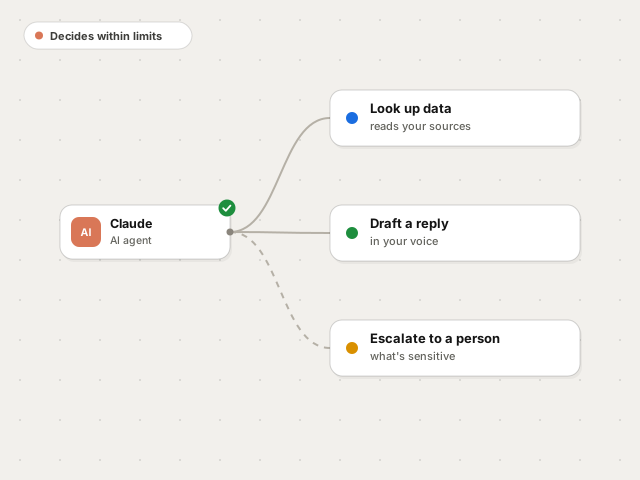
An AI agent is a program that uses a language model to decide the steps of a task inside a process: it reads the context, chooses among the actions it is allowed — look up a record, draft a reply, classify, escalate to a person — and executes the next one until the task is done. The key word is “decide”: it does not follow a fixed script, it chooses with judgment inside limits you define.
It is not a chatbot
A chatbot converses: it takes a question and returns an answer. An agent acts: it can read your documentation, find the order in your system, draft the reply and leave it ready for review. Conversation is, at most, one of its tools.
It is not classic automation
Traditional automation applies fixed rules: “if the subject contains invoice, move to the accounting folder”. It works until the case the rule never anticipated arrives. An agent handles ambiguity: it understands that “here's that payments document” is an invoice even though no rule says so. The robust setup combines them: fixed rules for the unambiguous, an agent for the ambiguous, a person for the sensitive.
What it does well today — and what it doesn't
- Well: classifying and routing messages, drafting in your tone, summarising long threads, extracting data from documents, answering questions written down in your sources.
- Badly: deciding without enough data, operations with irreversible economic impact, anything where an error costs more than the time saved.
- The short rule: the agent prepares, the person decides on everything that matters.
How it is kept under control
Three mechanisms, all three mandatory: scoped permissions (the agent can only do what is listed, not “whatever occurs to it”), human review at the points with a high cost of error, and full traceability (every action is logged with its reason). An agent without these three is not innovation: it is an unsupervised intern with access to your systems.
One running example
The LinkedIn assistant we use at Synkorai is an agent with exactly this design: it classifies every incoming message, drafts replies in its owner's voice for the routine ones and sets aside, untouched, anything that smells of negotiation or complaint. You can see the full flow in the published case, and we show it running live in the first meeting.